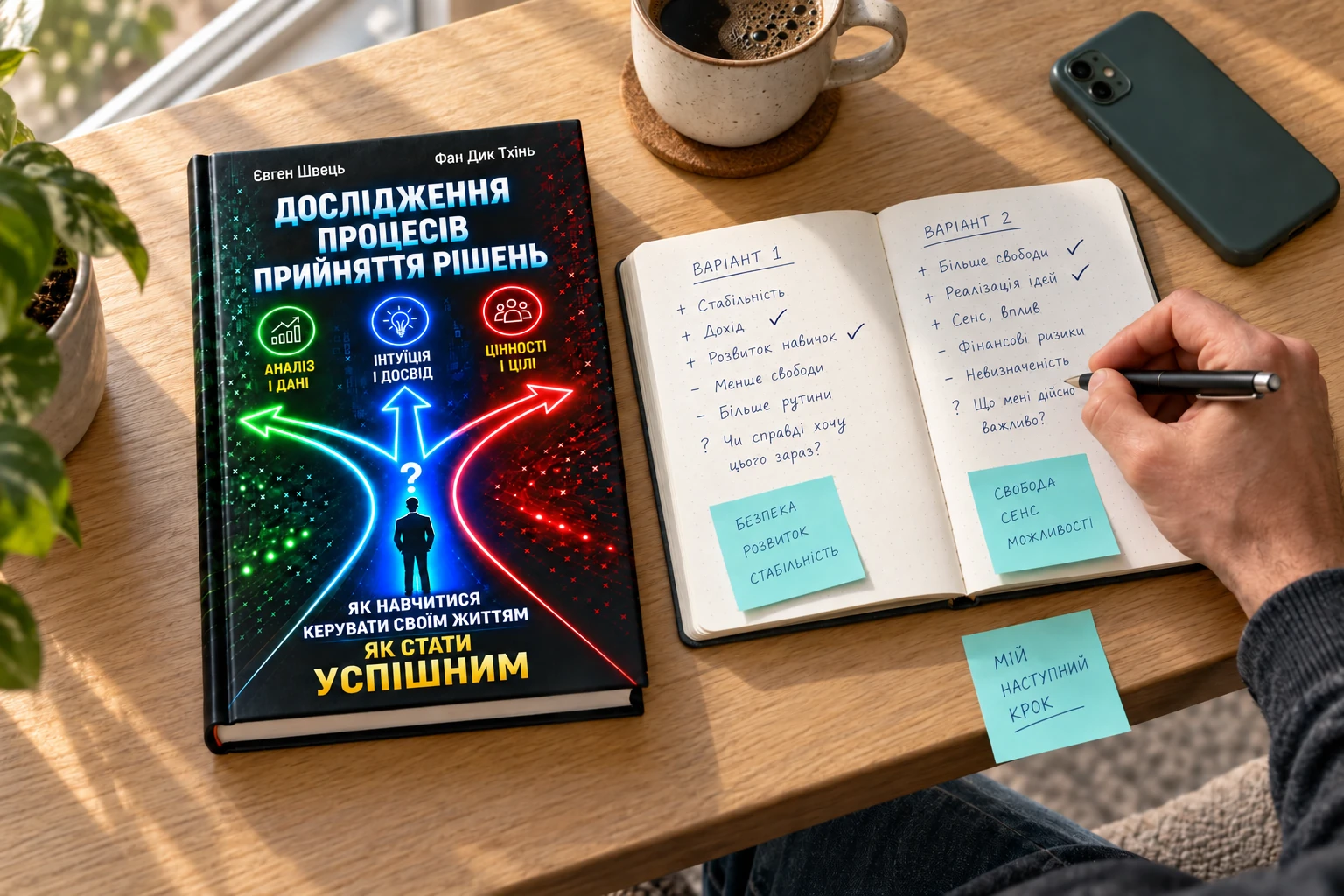
Everyone has spoken. The arguments have been discussed and the presentation reviewed. The next day, one person starts work, another waits for approval and a third thinks no decision has been made. Sound familiar?
“We agreed” can conceal different understandings of the outcome. A short record that everyone interprets the same way helps test the agreement.
Describe the problem in one sentence
“We need a new website” already contains a preferred solution. “Customers cannot find the delivery terms” describes a problem that may have several solutions.
Ask what is getting in the way, for whom and under what conditions. This framing helps the team discuss the task rather than compete to defend proposals.
Establish criteria before comparing options
Will you assess options by time, cost, customer convenience or risk? Which conditions are mandatory? If criteria appear after a favourite has emerged, they can easily be tailored to it.
Record missing information separately. Instead of saying “That is expensive,” identify the cost estimate required and who will check it.
Write a brief decision record
Five lines can be more useful than a long account of the conversation:
- The problem and desired outcome.
- The chosen option and the reason for selecting it.
- The person responsible for the first action.
- The deadline and resources needed.
- The review date and condition for revisiting the decision.
Read the record aloud. Ask each participant to name their next action. Different answers reveal what still needs clarification.
Leave room for new information
In the book’s method, “WHAT? WHEN? HOW?” leads into action. Action also produces new information, so reviewing the result should form part of the agreement.
A decision is actionable when everyone knows who takes the first step and how the team will learn what happened.
At your next meeting, try closing the discussion with these five lines. Check whether they reduce uncertainty for your team.
Prepared by the editorial team using ideas from the book. The situations are examples created for this journal.