A team has spent six months building a product. It has launched, but sales are weak. One argument keeps returning: “We have invested so much. We cannot stop now.” It describes the past. Does it help you choose the future?
Separate past costs from current options
Resources already spent matter when analysing mistakes. Continuing does not automatically recover them. The next month will require additional money, time and attention. Those are the resources you can still decide how to use.
Ask: “If we were starting today, knowing what we know now, would we fund this next step?” This helps separate an assessment of prospects from the desire to justify previous effort.
Define three alternatives
Compare continuing unchanged, running a limited experiment and stopping. For each, list the expected outcome, additional costs, risks and missing information.
A limited experiment could involve customer conversations and testing one change to the offer. Stopping could include meeting existing commitments and preserving useful work. Specific descriptions make the comparison fairer.
Agree on the criterion before the experiment
“Let’s try a little longer” sets no boundary. A more useful agreement might be: “Over two weeks, we will test whether the revised offer solves a problem for a defined group of customers. We will set a budget and a criterion for our next decision.”
The criterion must fit your business model. Do not substitute compliments or views for demand: someone can find a product interesting without needing it.
Before testing, identify the outcome that would make you change the plan.
Turn the conclusion into an action
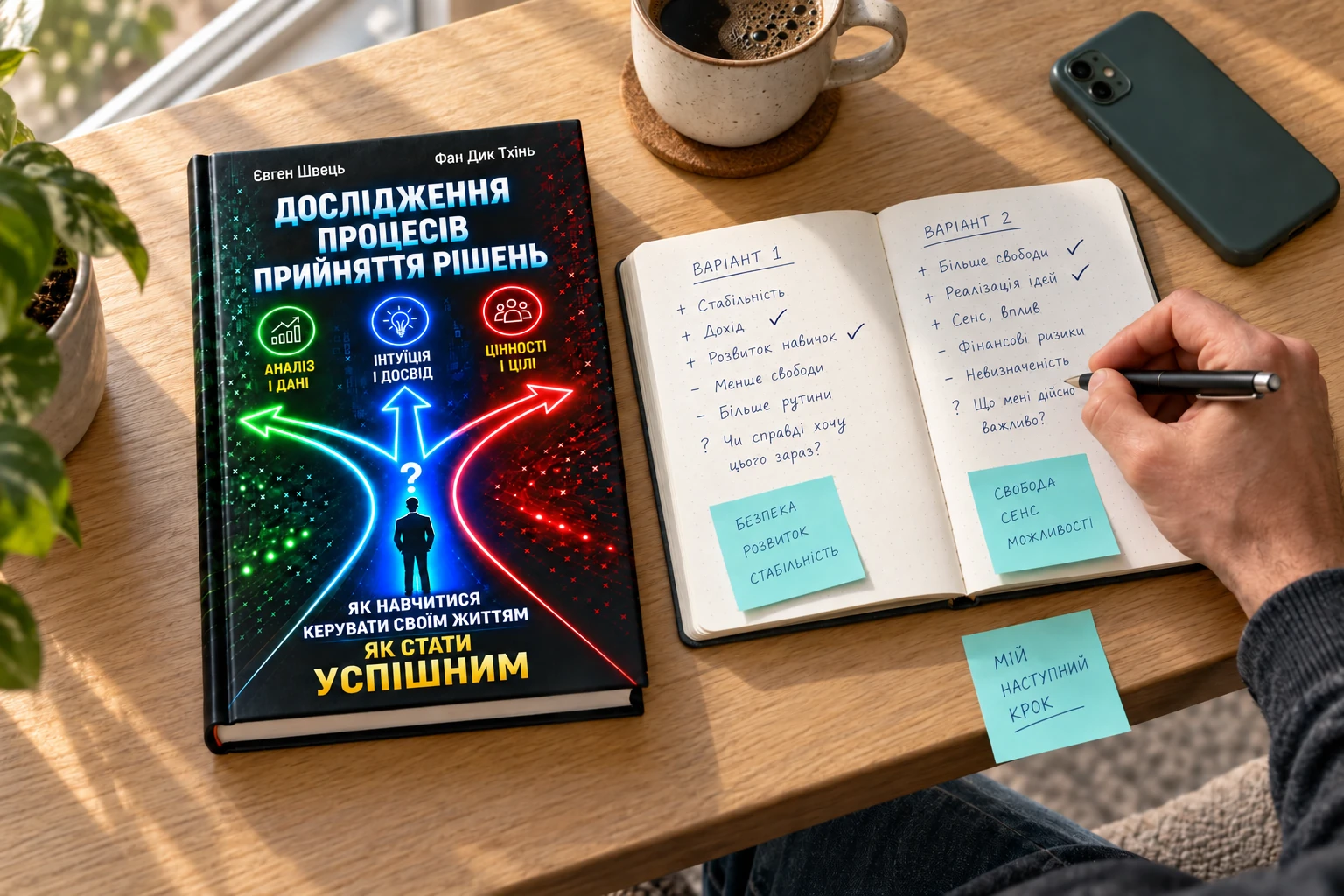
The book treats decisions as part of the interaction between a person, information and their environment. When conditions change, the model needs review. Write down what happens next, when you will check the result and how the experiment ends.
An acknowledged mistake can become useful information. That requires changing the next action as well as naming the mistake.
Prepared by the editorial team using ideas from the book. The situations are examples created for this journal.