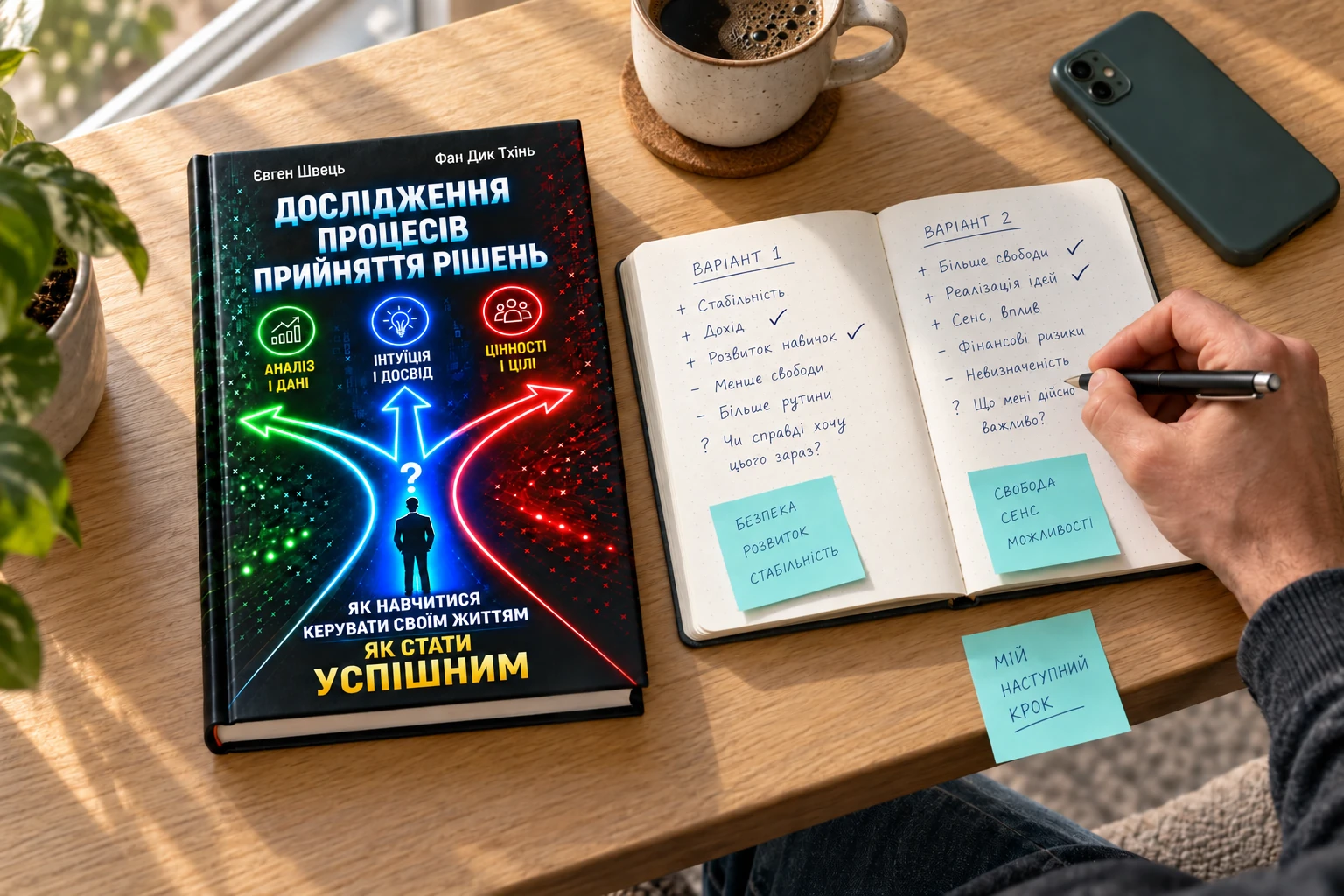
You open another article, another review, another tab. Information increases, but clarity does not necessarily follow. Did the last hour bring you closer to a decision?
The book connects working with information to a person’s goals and resources. For a practical choice, that suggests defining the boundaries of your search before you become absorbed in it.
Name the decision behind your research
“Learn more about renovations” is a broad topic. “Choose a contractor for a specific job by the end of the week” is a task that defines the evidence and deadline required.
Write the decision in one sentence. List three or four questions whose answers could change your choice. For a contractor, these might concern relevant experience, timing, the estimate’s scope and responsibility for problems.
Separate necessary from interesting
Necessary information helps compare options or identify an unacceptable risk. Interesting information broadens your understanding but may not affect the current choice.
Both have value. With a time-limited decision, it helps to know where your attention is going. Save additional reading in a separate list and return to the central questions.
Define a stopping condition
For example: “I have two comparable estimates, checked previous work and clarified the main terms. I can now compare the options.” This is more useful than “When I know everything.”
Important or difficult-to-reverse decisions require more checking. For a small, reversible choice, a limited trial followed by a review may be more useful.
End the search at a clear condition connected to the decision.
Review the last hour
What did you learn? Which option changed? Which unknown did you resolve? If none did, try a different action: ask a specific question, make a calculation or test an option on a small scale.
Prepared by the editorial team using ideas from the book. The situations are examples created for this journal.